
CARBOHYDRATES – Surprising Facts
Types of Carbohydrates
There are two types of carbohydrates, Natural Sugars and Starches.
Natural Sugars are simple, while concentrated starches are complex sugars.
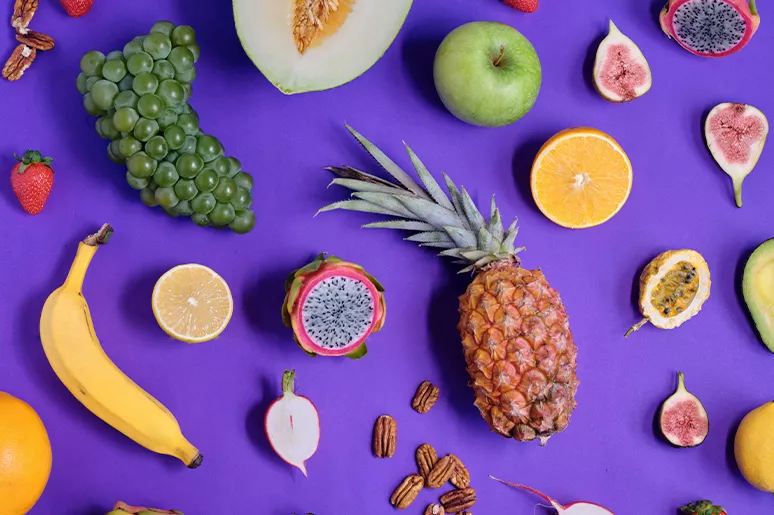
Natural sugars are found in ripe fruits, vegetables, and honey in their raw natural state.
They have a higher water content and are easier to digest than starches.
Starches also known as concentrated carbohydrates are found in all grains, (wheat, rice, millets, quinoa etc.) processed sugars (white sugar, jaggery, molasses, maple syrup etc.) and in products made from both (breads, biscuits, cakes, spaghetti, noodles etc.) and in some cooked vegetables, such as potatoes and tubers. The water content in them is very little and they require much more effort to digest. Natural starches occur in natural foods; however concentrated starches are manmade.
Digestion Of Starches
The human body is composed of approximately 70% water. All nourishment in the body must be converted into a liquid for it to absorb by the intestines.
In the composition of the body, 7% are natural sugar carbohydrates that dissolve in water, which the body can use constructively. There is not a speck of starch in the composition of the human body, as it is insoluble in water and cannot be converted into a liquid as starch.
When food is cooked, canned or otherwise processed, the natural sugars are converted into starches.
Energy must be expended to convert starches into simple sugars to make it soluble in water so that the body can utilize them.
Although foods like oatmeal and other cereals contain essential nutrients, their proportions and combinations are such, that they have a degenerative effect on the body over time. Cattle thrive on grains because their digestive systems are specifically adapted to efficiently process concentrated starches and proteins. The notion that the human body requires concentrated starches as a staple diet is entirely unfounded.
Calcification
Calcium is one of the most essential elements in our diet, but it needs to be obtained from fresh, uncooked foods like fruits, vegetables, their juices, nuts, and seeds. When any calcium-containing food such as grains are cooked or processed, they are converted into dead atoms. The calcium in such foods is insoluble in water and clogs up the system resulting in conditions such as arthritis, diabetes, coronary (heart) disturbances, varicose veins, hemorrhoids, gall and kidney stones. Too much inorganic calcium weakens bones.
Consequences of Starch Impactions
Dr Walker shares his own experience, “The interesting thing about the starch molecule is that it is not soluble in water, alcohol or ether. When I first realized this fact, I immediately discovered why the grain and starchy foods I had eaten in such quantities caused such impactions in the liver (cirrhosis) as to cause it to harden like a piece of board.
It also gave me the clue as to why gravel and stones are formed in the gall bladder and the kidneys, why the blood coagulated unnaturally in the blood vessels and capillaries and formed hemorrhoids, tumors, cancers and other disturbances throughout the system.”
Other outcomes of capillary impactions are blood clots, varicose veins, hardening of arteries, frequent dizziness, eye trouble, defective hearing, and unsteadiness of limbs when walking.
Heart Trouble
Carbon is one of the principal ingredients in the composition of carbohydrates. Regularly eating too many starchy foods without enough fresh vegetables can lead to a condition known as starch poisoning.
This is the result of a vast amount of carbon dioxide, generated by the oxidization of carbon in starchy food, which is not entirely eliminated.
The rate of the heartbeats is regulated by the volume of carbon dioxide present in the blood. Consequently, the more starch carbohydrates one eats, the greater is the danger of developing heart trouble. Starches should always be eaten with fresh raw vegetables.
Skin Blemishes
Habitual consumption of bread, cereals, and other starchy foods is often linked to pimples and other skin problems. As the starch molecule is insoluble in water, it travels through the blood and lymph streams as a solid molecule which the body cannot utilize. The starch molecules also line the colon (large intestine), like plaster on the walls of a room, thus, waste matter cannot be expelled through this channel. As a result, these wastes are expelled through the skin, and so we have pimples, boils, eczema and other skin eruptions and blemishes.
Over time, heavy reliance on starchy and grain-based foods can also leave the skin dry, shrunken, and withered.
Diabetes
It is a dietary disease resulting from the excessive consumption of concentrated starches and refined sugars and is aggravated by the consumption of meat. The body can use only simple sugars and not complex ones. Concentrated starch is a complex sugar; the pancreas must overwork to convert into a simple sugar. This results in diabetes.
Respiratory Troubles
The cause of respiratory problems is the presence of mucus, which is the result of drinking too much milk and eating concentrated starches, bread, and cereals in excess.
Multiple Sclerosis
Dr Walker says that MS is the, “Degenerative state of the nervous system due to starvation of nerve and cerebrospinal cells. This disease is the most conclusive evidence of the destructive effect of starches and grains used as food for humans. Many people however have been helped slowly to recover, by omitting starchy foods, and meat, from the diet, eating instead mostly raw fruits and vegetables, drinking at least 3 quarts of fresh RAW juices daily, and with frequent colonic irrigations.”
Gluten In Carbs
Gluten intolerance has become a buzz word as it linked to autoimmune disorders. People on a low gluten diet may feel healthier at first, but this benefit may not last unless starch is also minimized. Starch is the primary culprit; removing it from your diet also eliminates gluten found in starchy foods.
Why Eat It?
Dr Walker expresses, “All processed products made with flour, such as bread, cakes, crackers, spaghetti and other pasta are a package of dehydrated, concentrated starch. Starch is used by mankind in an infinite variety of ways. It is used as a binder and strengthener in making cloth. It is used to thicken colors and in mixing substances to make paper, medicines, toilet powders and in China clay. It can be said that starches are all very fine and useful, but – why are we eating them? Our bodies try to tell us that this manmade, artificial food is abnormal, but we are too occupied with our ailments and our overweight bodies to realize that these problems are Nature’s warnings that manmade foods are deleterious to our health and our figures.”
It Works
Old age is synonymous with weakness. If you do not know it to be a fact, you may be surprised to learn that starches and meats are the most weakening of our foods.
To the orthodox mind, this may seem drastic given that people have eaten grains and starchy foods for millennia.
In response, Dr Walker points to clear evidence that eliminating grains and starches while eating plenty of fresh fruits, vegetables, and juices, cleansing the body of accumulated waste, improves physical and mental health, often eliminating most previous ailments. Such people are healthier, live longer, and are freer from degenerative ailments than those who eat mostly cooked foods and little or no raw vegetables and juices.
Make Slow Changes
Dr Walker recommends gradual dietary changes for easier adaptation.
Here are some suggestions:
- Eat only whole grains and unprocessed foods, never eat refined foods and sugars.
- Never eat fried foods, they are indigestible.
- Eliminate grains for breakfast and opt for ripe fruits, nuts, seeds, sprouts, eggs and fresh juices.
- Slowly transition to some starch free meals, while eating more cooked and raw vegetables and ripe fruits.
- Always eat some raw vegetables with grains and other starchy foods.
- Take colon irrigations and enemas to remove intestinal impactions and toxins.
- Follow Food Combining, watch Parts 1-4 on this channel.